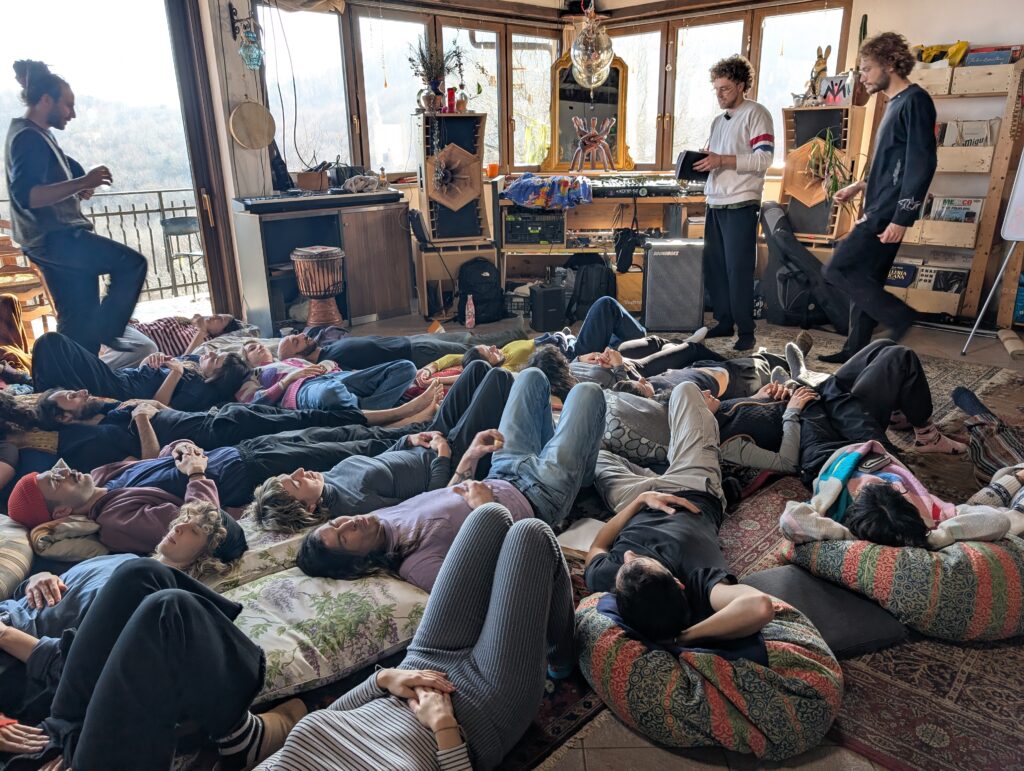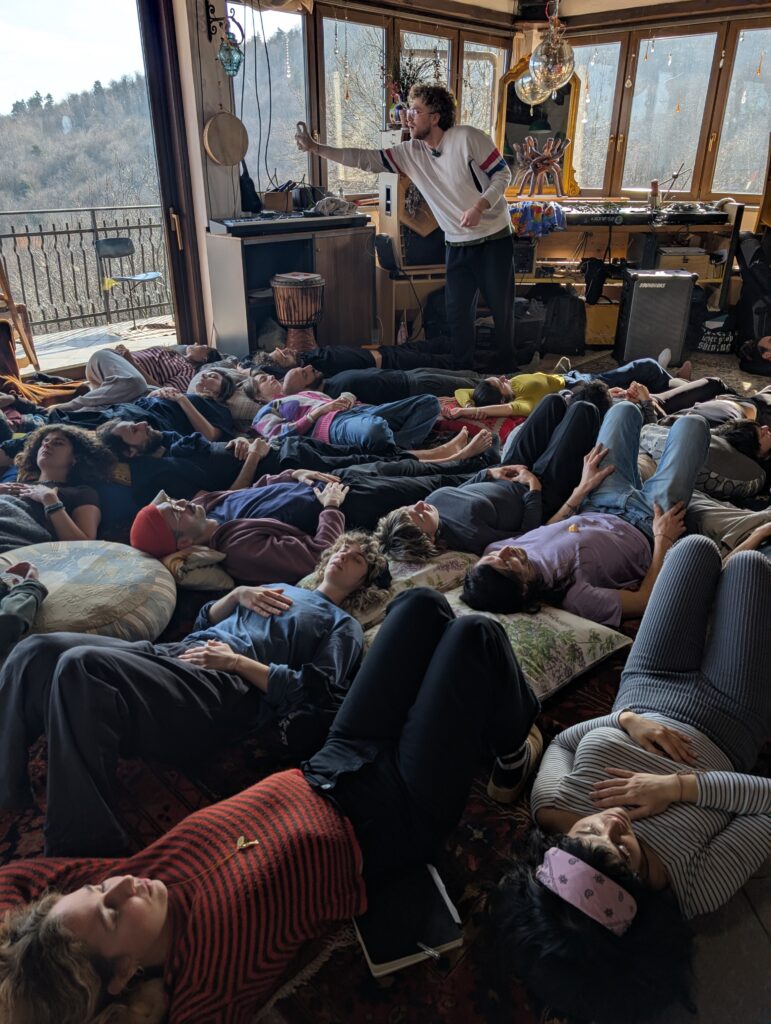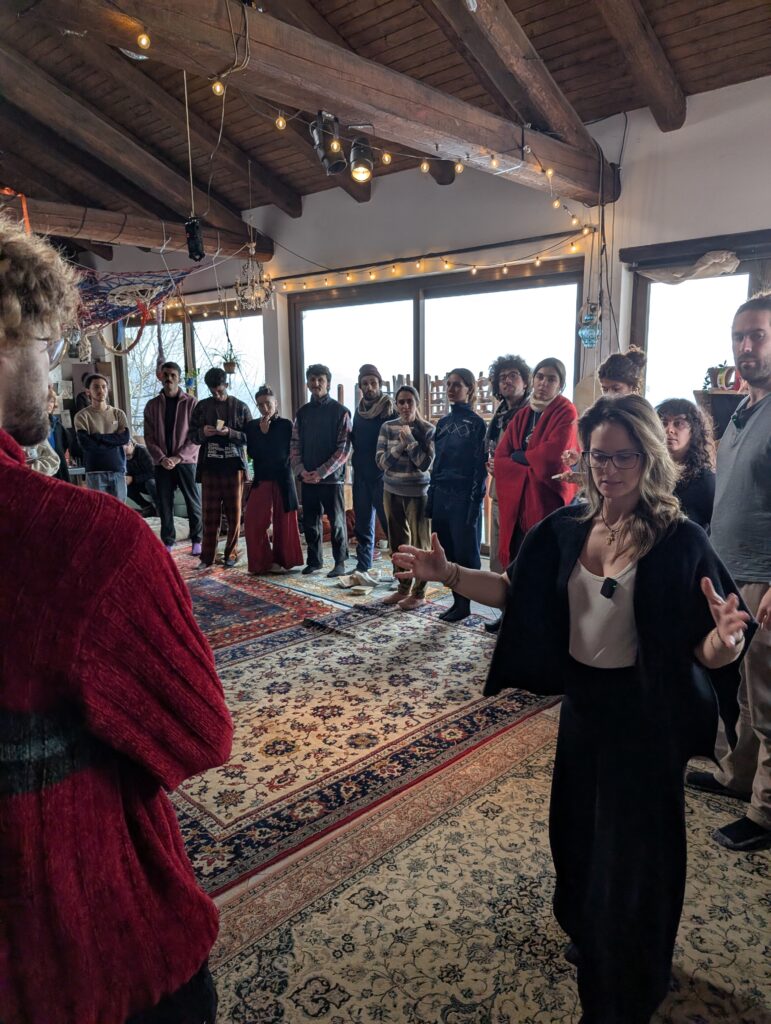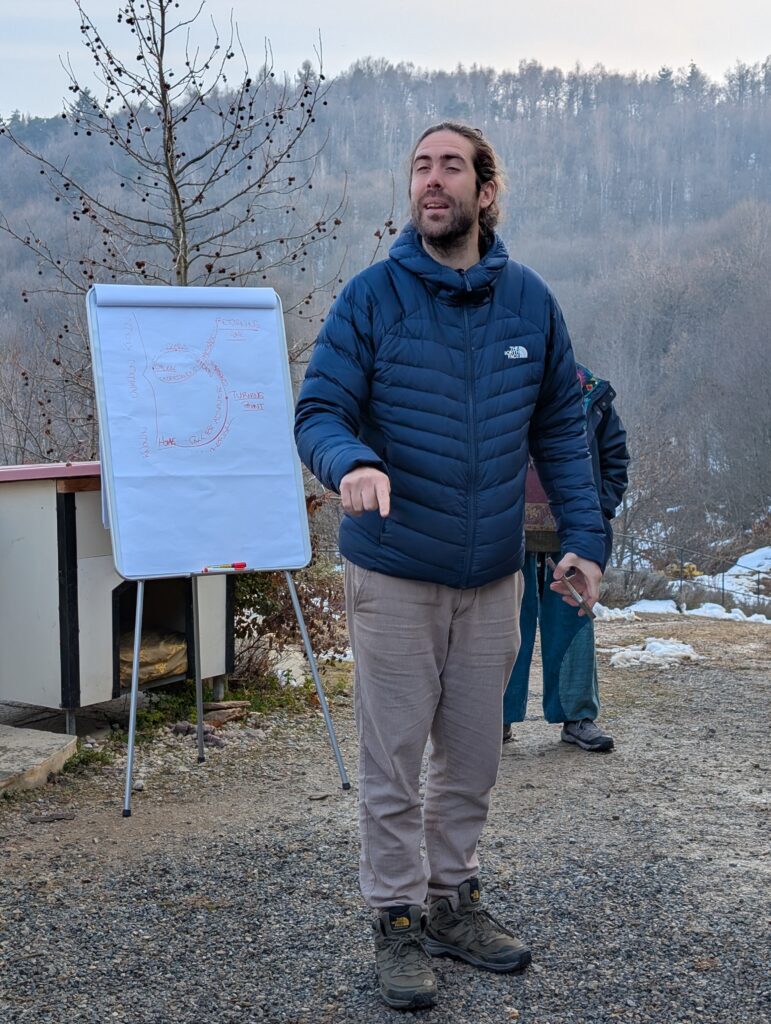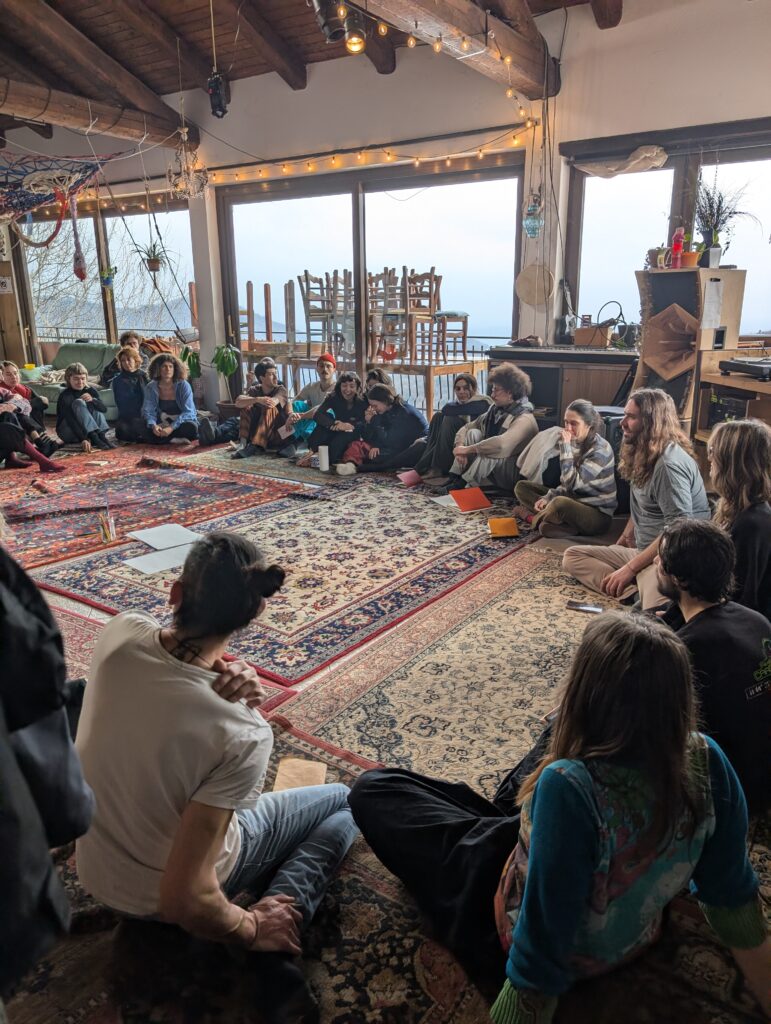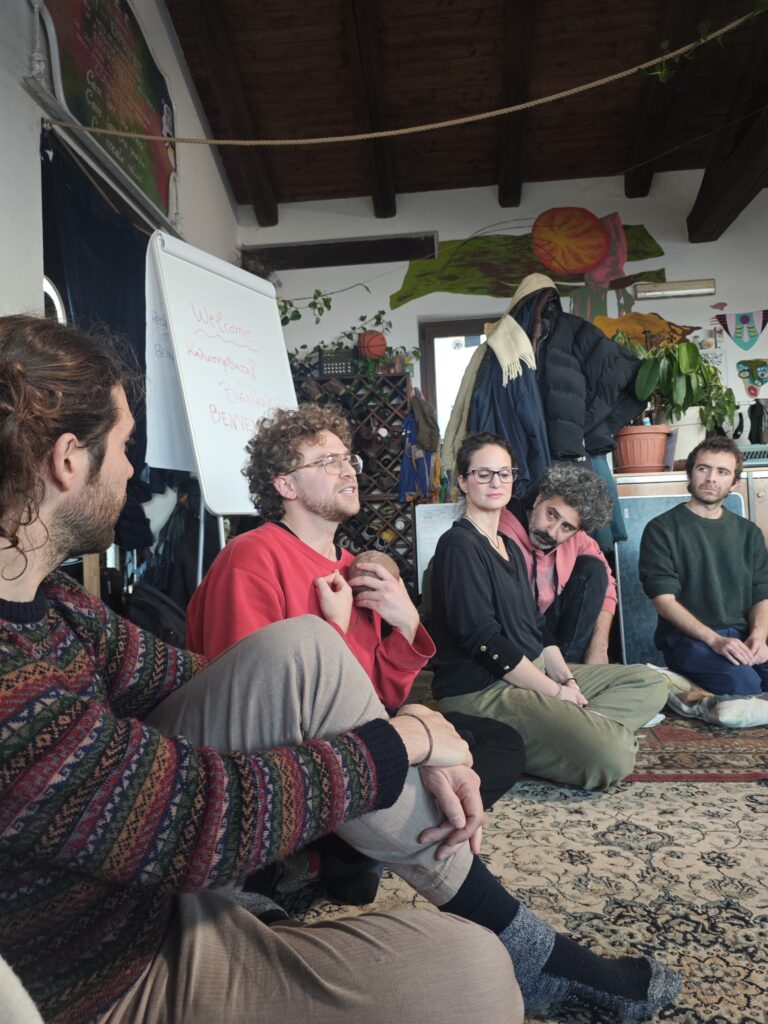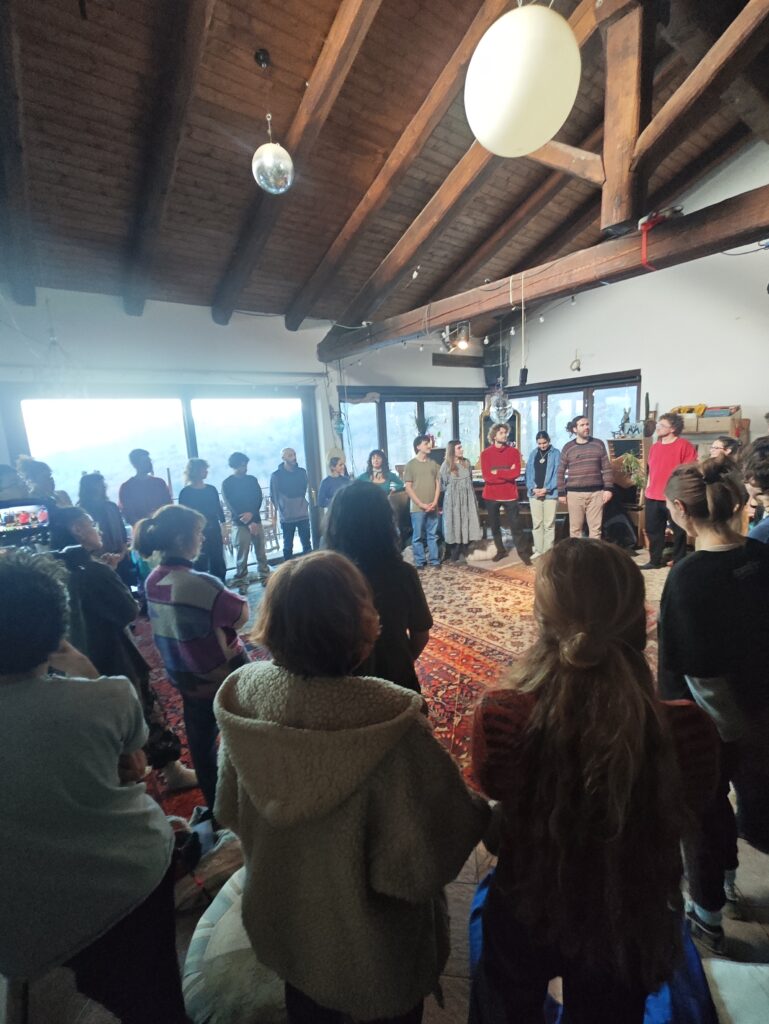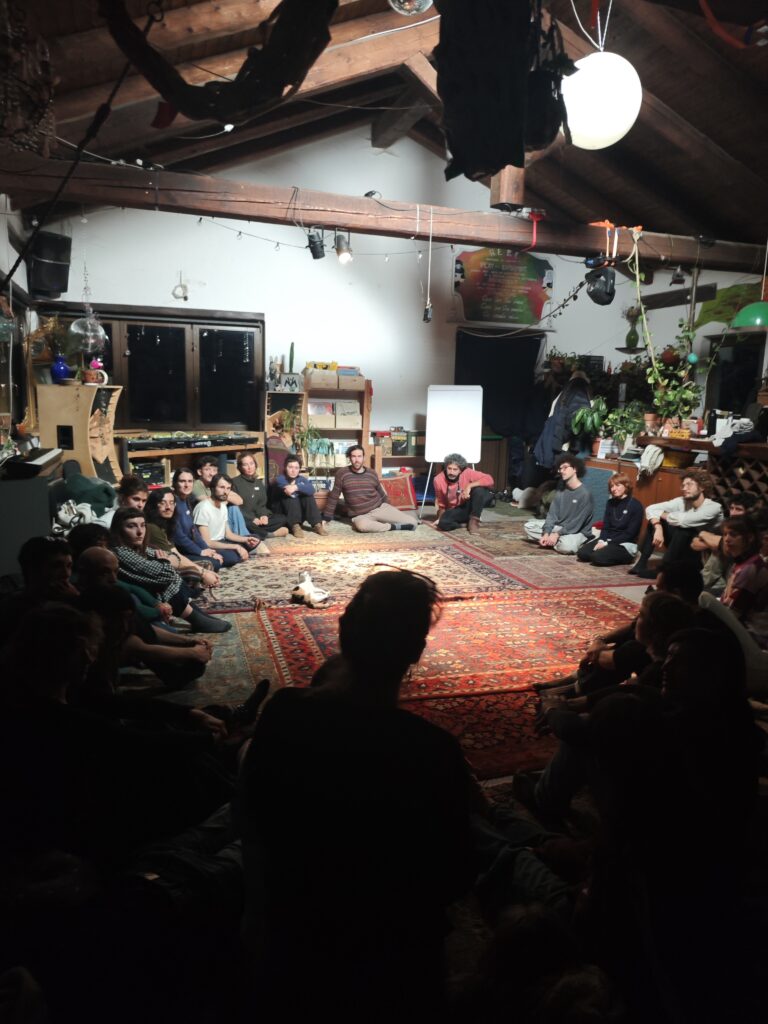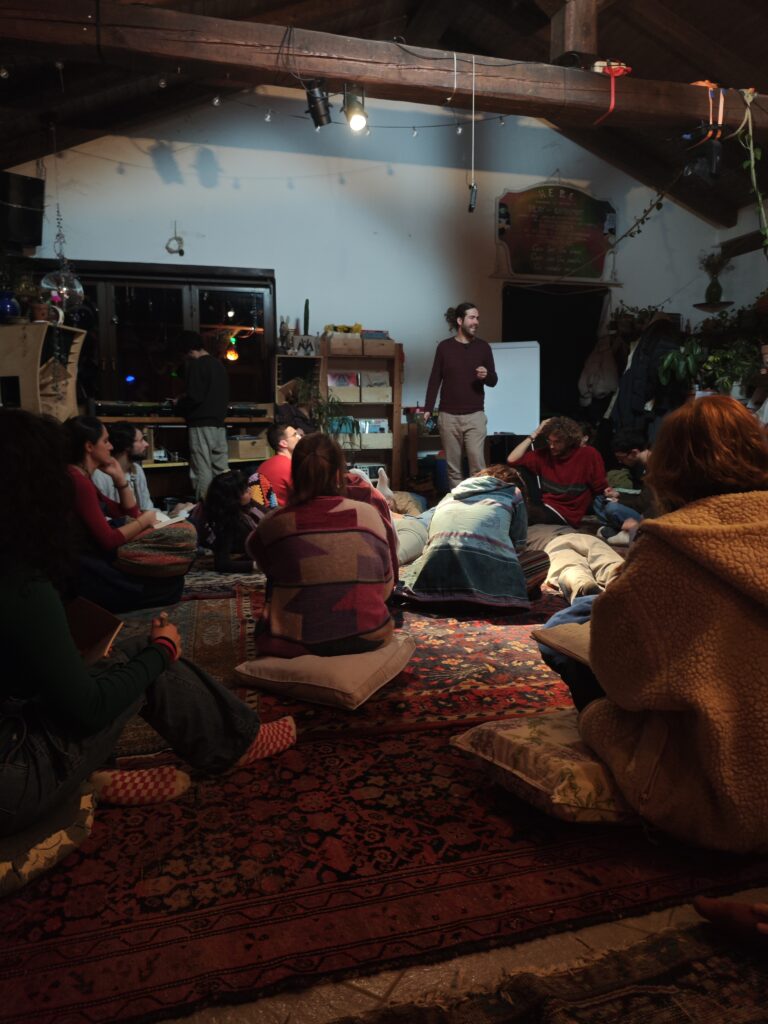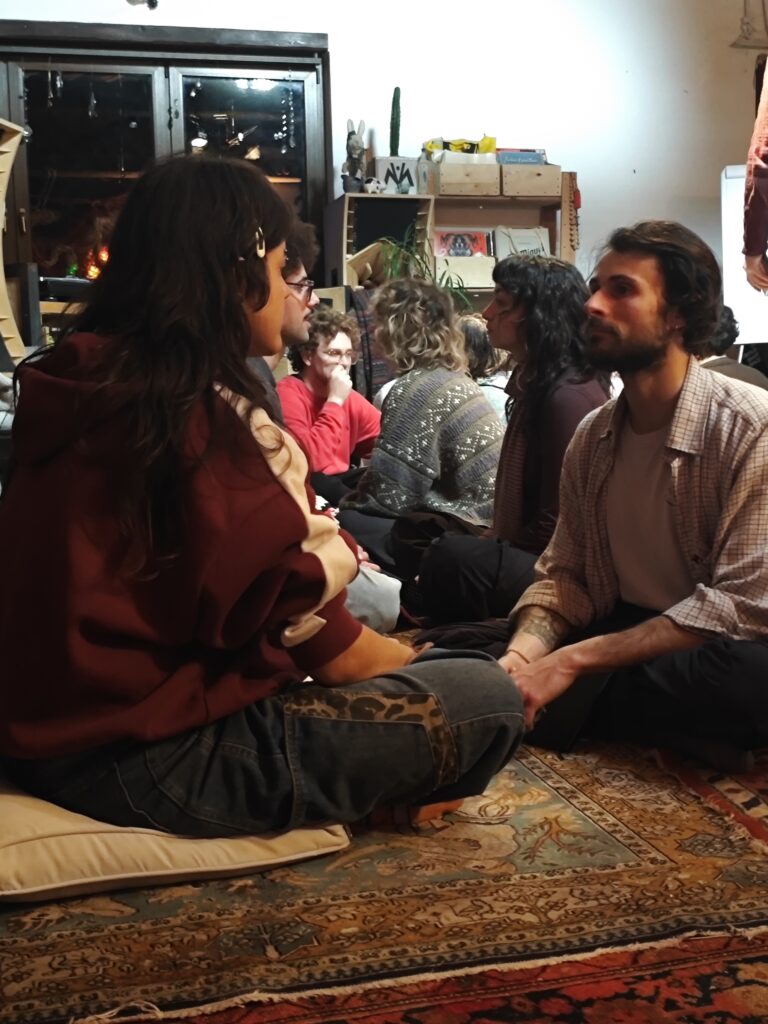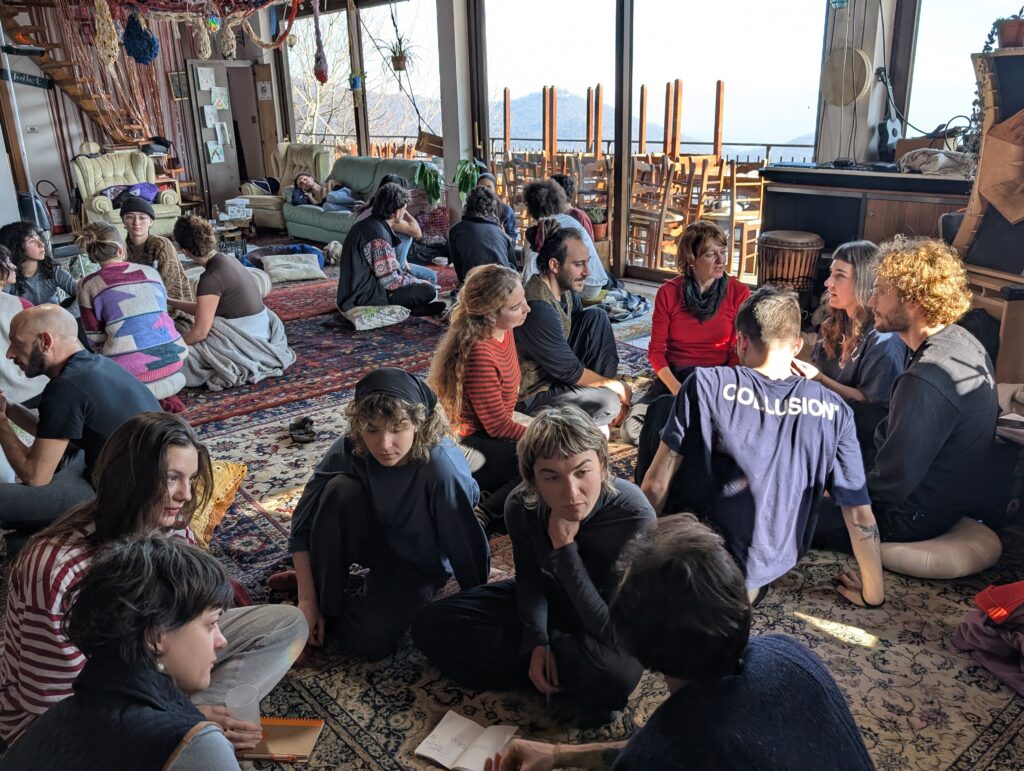
From 30 January to 1 February 2026, the Italian face-to-face Training for Artists of the MPAS project took place at Osservatorio P.U.S.H. in Busca, Cuneo. The training, titled “There Once Was a Fire”, was organised with the participation of Proyecto Nagual, HopeArt and Jugaad / P.U.S.H., bringing together 30 artists and creatives interested in exploring the role of art in mental health prevention and wellbeing.
Set in a quiet natural environment, the three-day programme offered an experiential introduction to the MPAS methodology, combining narrative, somatic, performative and artistic practices. The training was structured as a symbolic journey, beginning with arrival, safety and identity, then moving into story, personal calling and transformation, and finally closing with reflection, integration and continuity. Activities included the creation of a safe group space, symbolic character work, storytelling, embodied exploration, constellation-based practices, “Shaking Hands with the Monster”, and collective integration exercises.
The participants represented a rich variety of artistic and professional backgrounds, including visual arts, theatre, music, performance, dance, photography, cinema, circus, illustration, graphic design, poetry, storytelling and somatic practices. Some participants also had experience in psychology, psychotherapy, education, community work, cultural organisations and social initiatives, creating a strongly interdisciplinary learning environment.
The post-training questionnaire showed a very positive response. All 30 participants completed the evaluation, and most reported increased confidence in using artistic practices to support young people’s wellbeing. In particular, 27 participants stated that they felt more prepared to organise and facilitate art-based workshops after the training, while 28 said they would recommend the training to other artists.
Participants described the experience as intense, meaningful and transformative. Many highlighted the importance of storytelling, body-based work, vulnerability, collective care and artistic expression as tools for self-awareness, emotional processing and connection. The feedback also underlined the value of the MPAS approach for creating safe spaces where young people can express themselves, build trust and reconnect with their inner resources.
At the same time, participants offered useful suggestions for the future, including the need for a longer training format, more time for integration, additional theoretical framing and follow-up supervision when applying the methodology in real contexts. These reflections will support the further development and sustainability of the MPAS methodology.
Overall, the Italian Training for Artists successfully introduced participants to the MPAS approach and strengthened a network of artists motivated to use art, body, narrative and collective experience as tools for mental health prevention with young people and communities.